Get updates from The Developer straight to your inbox Yes, please!



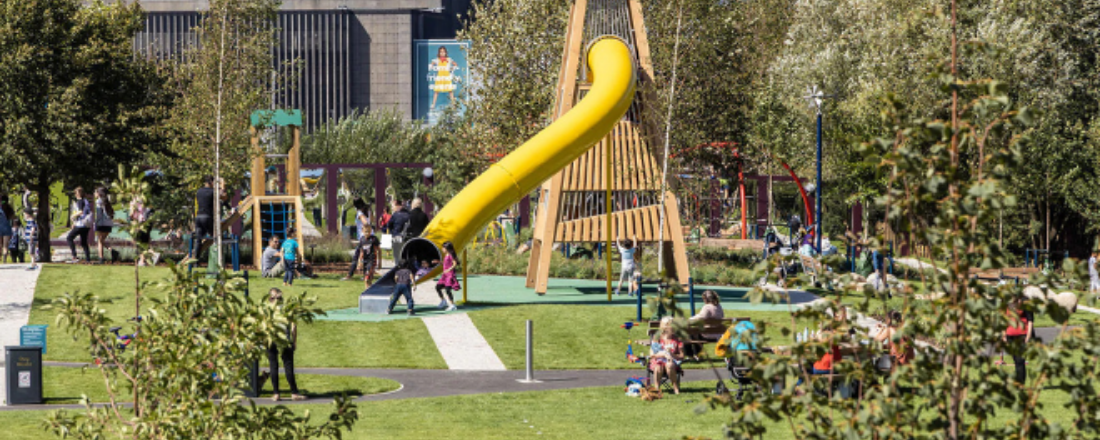
NSPCC calls for walkable, low-traffic and car-free streets to safeguard children
Leading UK children’s charity releases toolkit and calls on built environment to enshrine child safeguarding into the property development cycle


Publishing and Events Assistant,
The Developer and Festival of Place
Publishing and Events Assistant,
The Developer and Festival of Place
Too often children’s safety and wellbeing are overlooked by those working in the built environment – even though the evidence is clear that child safeguarding outcomes depend on design decisions and neighbourhood management.
That’s the view of the NSPCC (National Society for the Prevention of Cruelty to Children) – the UK charity that has been fighting child neglect and abuse for over 140 years.
Working in partnership with Mott MacDonald and with the support of Related Argent, the NSPCC has published "Building Safer Communities for Children" – a report that calls on the industry to embed safeguarding principles into the development lifecycle.
"The property sector has a critical role to play. By designing, maintaining and managing homes and neighbourhoods that prioritise children’s safety and wellbeing, it can help reduce risk at its source and contribute to healthier, more resilient communities in the future."
“When children are considered from the start, risks fall and communities thrive. When they’re overlooked, harm becomes predictable.”
Intended as a toolkit to help build safer communities for children, the paper focuses on urban communities and addresses traffic risk and crime as "dominant safety concerns for children." The report calls for "walkable neighbourhoods, with low-traffic or car-free streets, strong visual connections between homes and shared spaces and micro-scale features such as small play pockets, to support children’s everyday independence."
The paper uses the RIBA Inclusive Design Overlay as a guide to implement these principles into each stage of development. It also includes a framework for assessing progress over time, with a checklist of 8 indicator areas that need to be progressed to deliver safer communities for children.
"Keeping children safe requires environments that actively protect and nuture them."
“As the places children live, learn and explore become increasingly complex, it is essential that those who design, build and manage them take proactive steps to include children and their needs at every stage of development,” says James Beard, global lead for social outcomes at Mott MacDonald.
Over 20 teams have contributed and reviewed evidence that children’s outcomes are shaped by several place factors: their homes, neighbourhoods, services and wider systems. This has accumulated in six key focus areas and four call-to-actions to clearly communicate goals with business leaders.
To establish a framework across the whole subsystem, the report sets out a radial map to express how everyday services connect.
The four steps, Core Outcomes, Direct Drivers, Enablers and Practices and Subsystems, demonstrate the responsibility of key actors to support and manage children’s needs.
Morwenna Hall, executive director, chief operating officer of Related Argent says that we have: “a responsibility to influence best practice within the supply chains we operate; if we act collectively, we can strive to reduce predictable harm and create places where every child can thrive.”
This framework has been set out against six focus areas, or ‘pathways’, where environmental conditions and characteristics are influencing young people.
“It will help ensure that every child can grow up in supportive, inclusive and resilient communities,” says Beard.
In relation to these influential factors, a series of roles have been set out for contributors. Chris Sherwood, CEO of the NSPCC, says: “In this paper we set out a clear call to action to every professional in the built environment: partner with the NSPCC – through small interventions or large – to ensure children’s safety is at the heart of the spaces you design, build and operate.”
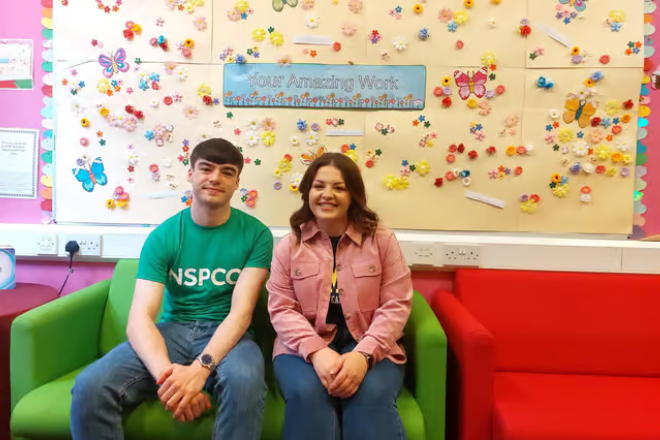
The charity highlights four calls-to-action for the built environment: Firstly, to give voice and ensure visibility to children through community engagement,, making young people part of any project from its inauguration. Second, to put child safety first and from the outset, with child-friendly design standards through to long-term stewardship plans. Third, to check policies and assess the organisation’s safeguarding position. And fourthly, to make child safeguarding everyone’s responsibility.
"By acting now, the sector can reduce predictable harm, improve asset performance and help build safer, more inclusive communities for future generations," reads the report. "Together, we can stop child abuse and neglect – by working with people and communities to prevent it, transforming the built environment to make it safer for children, and making sure every child has a place to turn for support when they need it."
The report calls on work already being done to provide environments which “protect, include and empower” young people. All of which are set out in inspiring case studies.
In Barking & Dagenham, the Barking Riverside Community Development Trust is taking a long-term stance to ensuring young people continue to influence their neighbourhood. Through engagement programmes, young people have a say in active and fun travel routes, through consideration of lighting, accessibility and play. The area is well supported by community centres, educational facilities and year-round neighbourhood events.
Car lite neighbourhoods and sustainable travel have also been applauded at Brent Cross Town for enabling children to move safely and independently. Related Argent and Barnet Council continue to measure how effectively Brent Cross Town is supporting its resident’s wellbeing through the Flourishing Index for extended understanding of neighbourhood impact.
And whilst London is proving to demonstrate many aspects of the key pathways, there are more communities, partnerships and designers across the UK paving the way for safeguarding children during the development cycle.
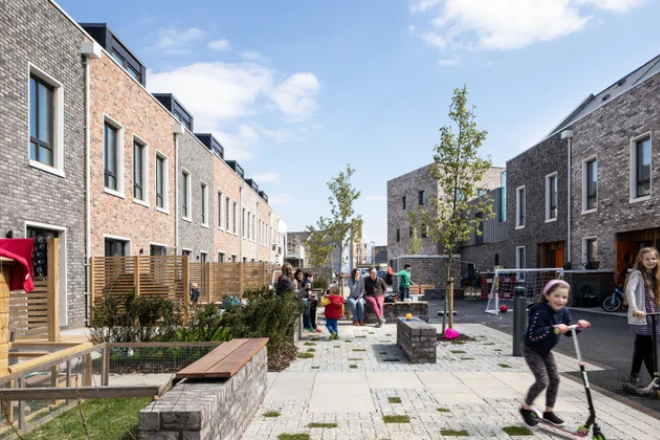
At the first co-housing project in Cambridge, Marmalade Lane, resident‑led governance is at the centre of safety. Through shared gardens, courtyards and outdoor rooms, community ownership fosters a watchful eyes environment where young people can explore with freedom.
Taking a wider approach is Birmingham Children and Young People’s Partnership, leading the strategic development of Children and Family services. Their work to coordinate services across education, health, safeguarding and community strengthens responses to young people’s challenges.
The NSPCC runs a number of key services to ensure children’s safety and provide training to empower everyone with the skills to aid young people.
Find out more Review the report ‘Building Safer Communities for Children’
Sign up to our newsletter
Get updates from The Developer straight to your inbox
Thanks to our organisation members
© Festival of Place - Tweak Ltd., 124 City Road, London, EC1V 2NX. Tel: 020 3326 7238