Get updates from The Developer straight to your inbox Yes, please!



Ruth Glass: Gentrification visionary
Not only was Ruth Glass remarkably ahead of her time in identifying and naming gentrification as a new phenomenon over 60 years ago, her work has continuing relevance in the subsequent social and housing market changes in London and other cities, writes Chris Hamnett


Just over 60 years ago, Ruth Glass, an émigré German journalist turned sociologist who had arrived in London from Berlin in the ’30s, coined the term ‘gentrification′ to describe the changes which were taking place in parts of central and inner London.
She was adamant that London was not undergoing the sort of social changes which were found in many American cities in the 1960s with the middle classes fleeing the city and the city given over to a poverty stricken underclass. Instead, she suggested that the risk for London was that it could undergo massive gentrification and become a city largely reserved for what she termed ‘upper-class strata′ with the working class displaced or squeezed out.
Glass viewed gentrification as essentially a class-based process operating through the housing market. Her identification of gentrification as an urban process was, however, only a small part of her writing about London, town planning and urban change in general. There is no space here to discuss this in detail, but she also wrote and researched about a number of other aspects of urban social change and urban planning including town planning (1948); new working class suburban housing estates in London; and the issue of recent Caribbean immigration into London and its impacts (1960). Her book on this topic: ‘Newcomers: the West Indians in London′ was a pioneering study published by the Centre for Urban Studies at UCL which Glass directed.
She also wrote about the social and housing impacts of Thatcherism, to which she was very strongly opposed, and urban sociology in general (1989). Remarkably, given its importance today, gentrification was something which Glass only mentioned in passing, though she did discuss the growth of the middle class in her 1973 essay and the wider issue of social class change in Britain in the introduction to her collected essays ‘Cliches of Urban Doom′ in 1989.
It is interesting to speculate to what extent her perceptive observations owe to her status as an émigré, viewing London from ‘the outside′. The precise nature of the class changes seen in London are still the subject of academic debate but the argument of this paper is that what Glass foresaw has now come to pass. London has undergone a long term process of gentrification over the last 50–60 years which has changed both its social structure and the housing market in a variety of ways. The causes of gentrification, the nature of the processes which are driving it and its consequences have been the subject of fierce debates in the literature which are too well known to merit repetition.
This is not to argue that the poor have largely disappeared from London (that would be nonsense) but they are being squeezed out of inner London and concentrated into smaller enclaves of rental housing
The process has shifted from original period terraced housing to new build riverside developments, warehouse loft conversions, new build apartments and other forms. In recent years this process of upwards social change has been intensified by the rise of the international rich seeking financial safe havens, investment opportunities and even homes in central London. The result is a process of ‘spatially displaced demand′ where middle classes searching for property to buy and lower income groups are pushed steadily further outwards by rising prices.
The process initially transformed older working class areas of inner London such as Fulham, Battersea, Camden Town, North Kensington, Islington and latterly Peckham, Shepherds Bush, Newham, Hackney and more recently areas in outer London like Harringay, Walthamstow and Tottenham as well as areas in north London originally built for the middle classes between 1870 and 1914 such as Holloway, Stroud Green and Muswell Hill.
At the other end of the income spectrum, as large amounts of council housing have been sold off or redeveloped, there is less affordable social housing available for low income groups. The result is increased competition for housing and a growing affordability crisis.
Not surprisingly, the low income groups lose out. The process has been compounded by introduction of government welfare benefit caps which are pushing the poor out of central and inner London in what some see as a process of social cleansing.
A combination of globalisation and class change are therefore conspiring to squeeze the poor and lower income groups out of inner London and increasingly make it a city for the rich and middle classes. This is not to argue that the poor have largely disappeared from London (that would be nonsense) but they are being squeezed out of much of central and inner London and concentrated into smaller enclaves of rental housing.
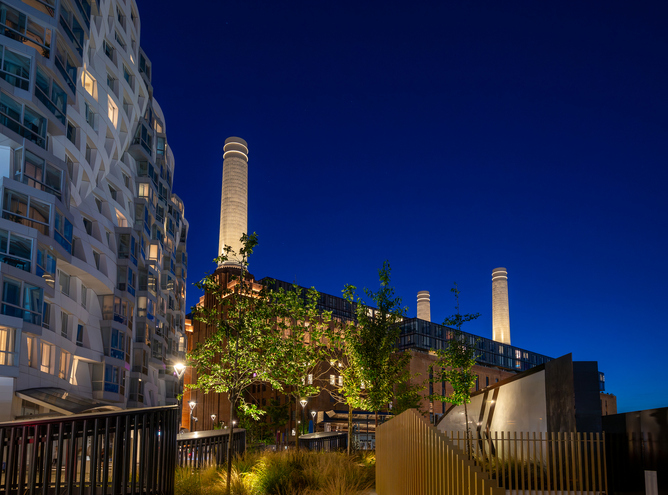
We are also seeing the gentrification of large segments of central London ex-council housing which was initially sold to sitting tenants but has subsequently been rented out or sold into the ownership market. This is compounded by local authorities selling estates to developers for upgrading. A large proportion of young people are now unable to buy.
The result is a process of ‘socio-tenurial polarization′ which is increasingly dividing London into two nations of renters and owners. Ruth Glass critically commented on the sharp decline of social housing. Her harsh critique was a forerunner of later and more general critiques of neo-liberalism.
It is quite rare that academics are able to coin a new term which subsequently takes off and acquires a life of its own. Gentrification is one such term, and one which has now acquired a global currency even though many of its users will have no idea of its origins or historical references. And like many other terminological hijackings, the term is now used in a variety of ways which may have surprised its originator.
It is clear that Glass’s use of the term ‘gentry′ was ironic. She was not suggesting that this expanding middle class group bore any resemblance to the gentlemen or ′gentry′ of C18th or early C19th England
The origins of the term gentrification are to found in the introduction to a volume edited by Glass (1964) entitled ‘London: Aspects of change′, a collection of essays published by the Centre for Urban Studies at UCL. Her introduction to the volume touched on many issues but arguably the most memorable is where she discussed the change in the residential structure of London post war and the term gentrification appeared for the first time. The key passage is now very well known but still important to reproduce.
"One by one, many of the working class quarters of London have been invaded by the middle classes—upper and lower—shabby modest mews and cottages, two rooms up and two down—have been taken over when their leases expired, and have become elegant, expensive residences. Larger Victorian houses, downgraded in an earlier or recent period—which were used as lodging houses or were otherwise in multiple occupation—have been upgraded once again. Nowadays many of these houses are being sub-divided into costly flats…. Once this process of ‘gentrification′ starts in a district it goes on rapidly until all or most of the original working class occupiers are displaced and the whole social character of the district is changed."
This simple, beautifully written English, mercifully free of unnecessary jargon or complex sentences has nonetheless a number of puzzling references which need unpacking and elaborating. The most important, of course, is gentrification itself: a term which ironically links back to the class structure of C19th rural England of Jane Austen which consisted at the top of the landed aristocracy with large country estates and farming income. Below them were the landed gentry (or gentlemen) with nice houses and some land and a good income, then the yeoman farmers, the tenant farmers, then the numerous landless agricultural labourers. It is an upper middle class group—the ‘gentry′ which Glass first identified in her essay though she says very little about them, what they do, or where they come from apart from a few perceptive words about changes in the labour market and the rise of new occupations.
"With the advance of technology, with the increase in the division of labour and of consumer expenditure, new occupations have developed, especially middle class occupations…………. project engineer, production executive, systems analyst, computer shift leader, sales promotion specialist, attitude tester, beauty operator, public relations manager."
It is clear from this list of occupations that Glass’s use of the term ‘gentry′ was ironic. She was not suggesting that this expanding middle class group bore any resemblance to the gentlemen or ′gentry′ of C18th or early C19th England. It was rather an increasingly important and expanding middle class occupational strata.
The gradual expansion of gentrification identified by Glass some 60 years ago has continued with few pauses. Large parts of inner London have been gentrified and the process has spread progressively further out from the centre
As Ley first observed in Vancouver, the growth of the professional and managerial middle class which provides the people for gentrification is a result of a long term changes in the industrial and occupational structure of London, which has been linked to a decline of manufacturing industry and the growth of London’s role as a centre for financial, business and creative services aided by state-led gentrification.
Changes in the industrial structure and the labour market provided the raw material for the greatly expanded middle class and as Glass noted, its corollarary is the shrinkage in the size of the working class as a result of the decline of manufacturing industry.
The result has been that London, like other cities such as Paris, New York and Washington now has many more highly educated and well paid professional and managerial workers than it had 60 years ago and their demand has had a major impact on the housing market. In particular, it has helped to push up prices in the centre and push demand for gentrifiable housing ever further out from its original areas.
The ‘mews′ houses which Glass refers too were once the rows of stables behind large C19th houses in central London, (and Paris) now often converted into garages or workshops. In the pre car C19th houses for upper class residents in central London had their own stables built behind the houses. The downgrading of larger houses refers to the departure of the original upper-class tenants of large centrally located houses with the development of suburbanisation and the gradual division and conversion of many such houses into lodging houses or multi-occupied dwellings for low income groups.
This process of downwards filtering of once grand inner city housing was quite common in the late C19th and mid C20th British and American cities as they expanded and the rich moved outwards. The result, as Glass indicates, was gradual deterioration, conversion and multiple occupancy.
The houses, usually of three or four floors had two three or four rooms per floor and they were fairly easy to sub-divide into individual rooms or small apartments. Thus, by the 1950s, London, like Paris and other cities, had a poor quality, predominantly private rented housing stock, with low levels of facility provision and very high levels of sharing. The 1951 census in London shows that nearly two thirds of households lived in shared dwellings, mostly private rented, though this had fallen to 44% in 1961. Even in 1961, 30% of households shared a toilet with other households and and 30% lacked a fixed bath. Residential densities were still very high and 12% of households lived at a density of over 1.5 persons per room.
It was this C19th terraced housing which provided the raw material, so to speak, for gentrification and gentrifiers to work on. And, inevitably, with a change from private renting to owning and from multi-occupation to single family occupation, there was considerable reduction in residential density as landlords gave tenants notice to quit and sold the houses. There is no doubt, however, that Glass saw this primarily as a process of social class change with the working class being displaced or replaced.
Some areas have experienced ‘super gentrification′ whereby the original gentrifiers have been replaced with a more affluent group further pushing up prices
The gradual expansion of gentrification identified by Glass some 60 years ago has continued with few pauses. Large parts of inner London which were not already affluent or in social housing estates has been gentrified and the process has spread progressively further out from the centre to cover much of the Victorian and parts of the Edwardian housing built until about 1914.
This is not to say that it is a totally comprehensive process, there are still some areas which remain partly untouched, but large parts of the old Victorian industrial belt around the city of London, Spitalfields, Clerkenwell, Southwark and parts of the East End such as Bethnal Green, Hoxton, Hackney and Docklands have been gentrified as has been shown for Bermondsey.
In addition, some areas have experienced ‘super gentrification′ whereby the original gentrifiers have been replaced with a more affluent group further pushing up prices. But, in the process, the nature and geography of gentrification has changed significantly.
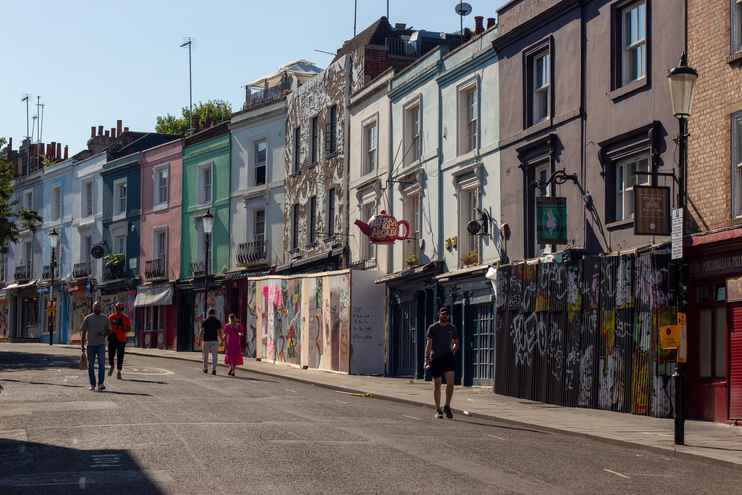
When Glass first wrote, the dominant process of gentrification in London was what can be referred to as the ‘classic′ one: that of the conversion and renovation of old individual houses in central areas usually by individual landlords or new owner occupiers. This was the period when gentrification took hold in period housing in Chelsea and Notting Hill in Kensington, in Primrose Hill, Camden Town and Kentish Town, Barnsbury and classic Islington squares.
Glass had recognised the process of conversion of large Victorian houses into individual apartments, sometimes with the aid of government improvement grants, and since then gentrification has taken on a large variety of new forms, as well as spreading in terms of its geographical extent. It is no longer confined to the central and inner areas and it has now widened to include loft conversions, industrial and warehouse conversions, new purpose-built middle-class housing in previously working class or derelict areas. The flat conversion process was the largest single source of new housing units in London for some years.
These processes changed the housing market and the social structure of large areas of inner London over a 30 year period but subsequently other processes also began to intensify the gentrification of inner London — processes which Glass had not foreseen.
One of the earliest changes was the conversion of nineteenth century riverside warehouses lining the Thames in working class areas like Wapping, Southwark and Bermondsey into luxury apartments. This started in the early 1980s after the move of London′s shipping and port industries downstream.
Today, virtually all of these old warehouses, with their spectacular river views have been converted. Next, were the old nineteenth century industrial premises and warehouses forming a broken ring around central London which were the subject of Peter Hall’s (1962) PhD and the first book on London’s Victorian industrial districts and also in Zukin’s (1982) pioneering work on Soho, New York. These were left high and dry by the deindustrialisation of London in the 1960s and 70s and although some were slated for conversion into offices the property market collapse of the early 1980s halted that.
Several things triggered their conversion into luxury residential apartments—one was the pioneering purchase and conversion of the old print building 1–10 Summers Street into apartments in 1986, the second was the change in planning policy which permitted the change of use from light industrial or warehouses to residential.
A range of other buildings have subsquently been converted ranging from old Victorian mental hospitals in outer London to Victorian schools, and 1960s office blocks, but the key symbolic illustration of these changes was the conversion into luxury residential apartments of the old Jewish Soup Kitchen for the Poor, built in Brune Street, in the city of London in 1901. It is fair to say that if something can be profitably converted into luxury housing in London it will be sooner or later. As the marketing blurb for St Bernard′s Gate (once the largest mental asylum in Europe) in Southall put it:
"If you’re after a home with a difference, you’ve come to the right place. St Bernard′s Gate in Southall is a renovated off-plan development that sits on the grounds of the very first pauper asylum built in England. Nestled in the leafy borough of Ealing, the development is home to a range of stylish 1 and 2 bed apartments which are in high demand due to the site’s historic interest and the generous sizes of the apartments, an increasingly rare feature in London property".
This was followed by the construction of new blocks of riverside apartments along many parts of the Thames. They highlighted the transformation of the river from transport waterway to a key conspicuous consumption location. This has continued for over 25 years and has transformed the river frontage.
The remarkable application of Darwinian evolutionary ideas to the London housing market and, it should be added, to the housing market of many other global cities, has proved to be astonishingly accurate
The next process has been the transfer of ex-council flats in to the private market. Some of these were bought under right to buy legislation but the original owners have sold and some of these flats now form the first step on the home ownership ladder for young professionals.
The third process has been the sale and redevelopment of some central and inner London council estates. This has taken various forms—involving outright demolition and rebuilding such as the Aylesbury and Heygate estates in Southwark and more recently the Woodberry Down estate at Manor House and others involving stock transfers to housing associations. A major consequence is that housing built for the working classes has now been socially transformed into middle-class residences.
Most recently, the buoyant growth of the private rented market has seen an explosion of build-to-rent developments across London. The high rent levels in these developments ensure that they are almost all for the middle classes. Glass anticipated these changes in her introduction to ’Cliches of Urban Doom’. She could see the social consequences of the shrinkage of council housing as a result of right to buy.
The social consequences of gentrification are predictable. In a competitive housing market where access is ruled by price; the expansion of the middle classes in inner London has been associated with the rolling-back of the less skilled, the unemployed, the poor and ethnic minorities who have been steadily concentrated into the remaining inner London local authority estates and the housing association and growing private rented sector.
Again, the process was perceptively anticipated by Ruth Glass who noted in 1964 that: "There is very little left of the poorer enclaves of Hampstead and Chelsea: in these boroughs, the upper-middle-class takeover was consolidated some time ago. The invasion has since spread to Islington, Paddington, North Kensington—even to the ‘shady′ parts of Notting Hill—to Battersea, and to several other districts, north and south of the river (The East End has so far been exempt). And this is an inevitable development, in view of the demographic, economic and political pressures to which London, and especially central London, has been subjected".
Glass′s reference to the ‘shady′ parts of Notting Hill refers to its role in the 1960s along with Brixton, as one of the areas of cheap housing occupied by West Indian immigrants—a topic she addressed specifically in her book ’London’s Newcomers’ (1960). Subsequently, of course, Notting Hill and North Kensington and Kensal Rise has undergone massive gentrification and nor in fact, has the East End been exempt.
The reality is that, while there is now a much larger middle class in London, there is relatively little actual social mixing between different social classes even if they live in close proximity
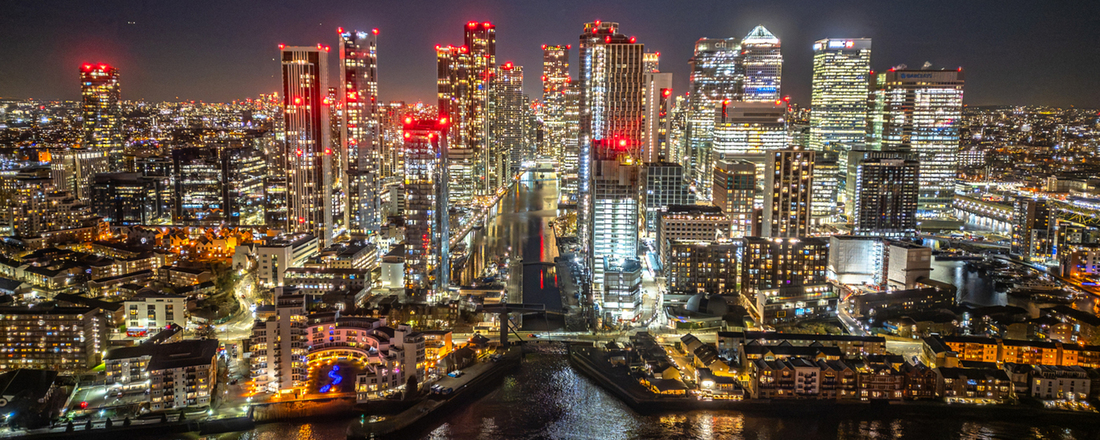
The redevelopment of Canary Wharf in Tower Hamlets and subsequent transformation of the Stratford Olympic site led to construction of large numbers of new apartment buildings for sale in Newham and now small three bedroom Victorian terraced houses built for the working classes toward the end of the C19th in East Ham, West Ham, Leyton and Tottenham are being gentrified at prices of £700,000+.
In fact, Glass (1964) went on to note apropos of the continuing inflation of property prices in London that: "Any district in or near London, however, dingy, or unfashionable, is likely to become expensive, and London may quite soon be a city which illustrates the principle of the survival of the fittest: the financially fittest, who can still afford to work and live there…Thus London, always a unique city, may acquire a rare complaint. While the cores of other large cities in the world, especially of those in the United States, are decaying, and are becoming ghettoes of the ‘under-privileged′, London may soon be faced with an ‘embarras de richesse′ in her central area- and this will prove to be a problem too".
This remarkable application of Darwinian evolutionary ideas to the London housing market and, it should be added, to the housing market of many other global cities, has proved to be astonishingly accurate. Today, to be able to live in the central areas of London, Paris, San Francisco and New York or Beijing and Shanghai, it is necessary to be either very wealthy or living in protected social housing.
What has been seen in some areas is what scholars Tim Butler and Loretta Lees have referred to as ‘super gentrification′ whereby some of the earlier gentrifying groups are being gradually replaced by an increasingly wealthy group, comprised of lawyers, investment bankers, hedge fund managers, senior executives and the like. This is not surprising when houses which sold forty years ago for £20–30,000, and 20 years ago for £300–400,000 can now sell for £1.5 million. Similarly houses which once sold for £100,000 may now sell for several million. At the top end some houses and luxury flats sell for tens of millions of pounds.
The result of these two processes may have resulted in a decline in social segregation at the borough scale in London. There is no longer a small upper middle-class residential area in central London surrounded by a largely homogeneous sea of working-class housing as there was in the 1960s. The social class composition of inner London is now far more affluent than it was 50 years ago. But, at the local level, it is likely that segregation has risen between wealthy home-owners in one street and low-income council tenants a few streets away.
As Glass (1973) pointed out 50 years ago: "The ‘colonising′ drive of higher classes in London has been accelerated; and so working-class quarters are becoming more constricted. Apart from the very rich, it is mainly the young members (or aspiring members) of the middle-upper strata, single people or couples without family responsibilities, who are prepared to pay the exorbitant housing prices of the inner sector, despite the fact that they rarely get value for money.
The days when young professionals and managers on moderate salaries could find a cheap house to buy and renovate in inner London are long gone.
"As these people live mainly in one- or two-person households, they have a disproportionately large number of households, and a disproportionately large housing demand, in relation to the total population size of their group. By virtue of their social position, reinforced by their youth, they are therefore bound to have expansionist tendencies. There are few hurdles in their path. The working class population of Inner London, old timers or recent recruits, find it more difficult to resist being displaced or hemmed in".
She went on to add that "traditionally, the most elegant neighbourhoods… used to be socially mixed (or, as might be said nowadays, polarised). While in such areas the upper class was socially predominant, it was statistically in a minority."
The outcomes in terms of social mixing (or the lack of it) in a variety of gentrified areas in London have been identified by scholars. The reality is that, while there is now a much larger middle class in London, there is relatively little actual social mixing between different social classes even if they live in close proximity and a continuation of gentrification keeps slowly changing the class balance in an upwards direction, as Glass foresaw.
Glass was remarkably prescient in her ability to predict the future of social change in inner London. Even in the early 1960s, Glass was able to foresee some of the dramatic social changes which would reshape London over the next 50 years including the squeezing out and replacement of the working class from many inner city bastions.
What is remarkable is that she firmly rejected the view that the middle classes would leave London and its social structure would shift downwards. The concern in the early and the mid 1970s was that London could be on a downwards trajectory. The reference point was the American urban experience of white suburbanisation, black in-migration and urban economic and physical decline.
The empirical evidence for the last 60 years is generally clear cut. Almost all the studies undertaken since Glass wrote have shown that the professional and managerial middle class (who provide the raw material for gentrification) has continued to grow
The precise nature of the fears varied, but the London Development Plan (1969) argued that London could be facing a similar situation to that experienced in United States, where the ‘flight to the suburbs’ of the middle classes and the concentration of the poor and ethnic minorities in the inner cities had led to the spatial segregation of social classes. This was reinforced by fears that middle income groups were leaving London for the new towns.
But Glass was clear in 1973 that London was on an upwards trajectory rather than a downwards or polarising one. As she put it: "London is now being ‘renewed’ at a rapid pace—but not on the model about which we are so often warned. Inner London is not being ‘Americanised’: it is not on the way to becoming mainly a working class city, a ‘polarised’ city, or a vast ghetto for a black proletariat. The real risk for Inner London is that it might well be gentrified with a vengance, and be almost exclusively reserved for selected higher class strata".
Glass continues: "The image conveyed by the term ‘polarisation’ (alias the ‘rout of the middle classes’) is, first, that both the top and bottom groups in the society of London are becoming larger, at the expense of the middle strata; second, that the extreme groups are, or will be, located in sharp juxtaposition to one another—on either side of the ‘tracks’. Both these images are false. In fact, the upper and middle strata are becoming stronger, numerically, in Greater London, and the skilled manual group has remained stable, while the proportion of non-skilled workers has decreased".
The empirical evidence for the last 60 years is generally clear cut. Almost all the studies undertaken since Glass wrote, from Wilmott and Young (1973) who looked at the period from 1951 to 1966 to the most recent, have shown that the professional and managerial middle class (who provide the raw material for gentrification) has continued to grow.
London experienced a long term general process of professionalisation from 1961 to 2021. The exception was Manley and Johnston’s (2014) study which showed a small temporary cessation in the proportion (but not the size) of the professional and managerial middle class in the decade 2001–2011 and a small, but significant, increase in the size of the routine and self employed groups.
The social structure of London has been dramatically transformed, not by a large and growing proletariat, but by a large, growing army of professional managerial workers
Similarly, while virtually all the studies show a reduction in the size of the working classes, Hamnett (2024) shows a small increase in the size of the routine manual and self employed and own account workers over the period 2001–2021 along with a substantial increase in the size of the professional and managerial group. Finally, Cryer and Crankshaw (2026) uses occupational class data from 1981 to 2024 to show a continuing process of professionalisation. But these are overall trends, and are not indicative of gentrification per se.
Three studies are important here for the geography of gentrification. Hamnett (2024) found that while the proportion of managers and professionals increased across all boroughs, the increases had diffused outwards from central London, and was particularly marked in a broken ring of boroughs around central London which he linked to gentrification.
Morris (2025) looked at social class change from 1991 to 2021 using a novel methodology involving incomes to compare census data. She found that the occupations with highest incomes grew most in the central and inner London boroughs and occupations with the lowest incomes grew most in the outer London boroughs. Smith (2022) also compared census occupational class data for 2011 and 2021 on the percentage of professionals and managers and associate professionals at a small scale. His impressive graphics clearly show the expansion of these groups into poorer parts of London such as Stratford, Deptford and Greenwich.
Finally, although the methodology is unclear, the Trust for London (2025) research identified 53 small areas in London which they identified as having undergone most marked gentrification in the period 2012–2020 in terms of increases in average neighbourhood income (unspecified whether individual or household incomes) and three other variables including changes in ethnic composition and house price changes. The methodology is not properly explained but the findings identified low income areas in the boroughs of Tower Hamlets, Newham, Lambeth, Southwark, Haringey, Brent and Greenwich experiencing gentrification during this period. It is therefore clear that gentrification is pushing out into parts of outer London where the housing stock and housing prices are conducive.
Cunningham and Savage (2017), using large scale survey data rather than the census, show that over the last 20–30 years inner London has consistently shown a pattern of more marked middle class gentrification accompanied, in recent decade, by less marked growth at the bottom end in some outer boroughs. They also have some illuminating small area maps showing areas of intensification in the professional and managerial social classes from 2001 to 2011 pushing outwards, and decreases in the intensification of lower occupational class groups in central and inner London. This is has been accompanied by a pattern of house price increases in inner London far higher than in outer London, though this has spilt over into some outer areas such as Tottenham, Leyton and Walthamstow as a result of spatially displaced demand.
The days when young professionals and managers on moderate salaries could find a cheap house to buy and renovate in inner London are long gone. Indeed, prices are such that even those who can afford to buy are often dependent on the bank of mum and dad to fund a deposit. As Glass noted in 1964, access to decent housing in London is now increasingly the preserve of the financially fittest or the financially fortunate.
What has also been confirmed is the process of ‘super gentrification′ first identified by Butler and Lees in Barnsbury and subsequently in other areas of London (Lees and Rosena 2025) and other cities. What this involves, in essence, is a process of upwards social class and income change whereby the original gentrifiers, some of whom may have been public sector professional workers, are gradually replaced by progressively higher income groups further pushing up house prices in the process.
Super gentrification has reached its peak in some central areas of London, notably in Mayfair, Holland Park, Notting Hill, Chelsea and South Kensington and other areas which have been transformed to become a base for Russian oligarchs and a wide variety of other overseas investors, many of whom do not actually live there but simply purchase property as a financial asset or security hedge. One of the characteristics of this process is the excavation of large basements for garages, gyms, TV and film rooms etc. This has caused considerable resident anger. Some of the properties are clearly a product of illegal overseas financial gains and have been subsequently seized by the government.
Another major process has been the gradual transformation of a large proportion of former social housing stock to owner occupied or privately rented through right to buy purchases and subsequent sale or letting. This began in a number of Conservative controlled boroughs, notably Westminster and Wandsworth, during the Thatcher era (Dimoldenberg 2006) but has subsequently spread to many parts of central and inner London where it has been possible to make financial gains by flipping properties into private hands.
What this has done is to reduce the supply of social housing across the capital, particularly in fashionable areas of central and inner London such as Camden, Westminster and Kensington where some ex-council properties now sell for considerable sums.
All these changes have continued the process of gentrification in London which Glass first identified. Glass anticipated the future social structure of London. What she foresaw has, largely, come to pass. The social structure of London (and a number of other leading cities with large finance and business service element) has been dramatically transformed, not as some people anticipated by a process of proletarianisation, with a large and growing proletariat, but by a large, growing army of professional managerial workers.
This is not to say that London or other cities have seen its working class largely disappear. That would be nonsense. But it has undoubtedly shrunk in size since 1960 both as a result of massive industrial change and the virtual disappearance of manufacturing industry and expansion of gentrification into a wide variety of areas has seen the working class and low income groups slowly squeezed out of large parts of London or concentrated into what remains of its social housing sector and its expanded private rented sector.
Glass was an urban visionary. What she could not have seen were the many new forms gentrification taking place in both different parts of the housing market and in new areas. But the changes have been consistent with her original analysis. London, like many other major cities, has become a much more middle class, and a much more unequal, city in recent decades and gentrification is an important spatial expression of that change.
The transformation of parts of the social housing sector through both individual sales and large scale estate redevelopment are part of the same overall process along with the resale of homes already in the private market. And although the less skilled routine workers and the self employed groups have been growing since 2001, the former lack purchasing power and will be squeezed into what remains of social housing and, increasingly, into poor, low quality, shared accommodation in the private rented sector in outer London.
Gentrification is slowly inverting London’s social geography as the better off buy proximity to the city centre as Glass’s beautifully clear, theoretically unencumbered, style of writing foresaw.
This article was first published in Population, Place and Space, Volume 32, Issue 2 and is reproduced here under Creative Commons 4.0 license. The article has been edited for style and length. For all references, see the unabridged article.
If you love what we do, support us
Ask your organisation to become a member, buy tickets to our events or support us on Patreon
Sign up to our newsletter
Get updates from The Developer straight to your inbox
Thanks to our organisation members
© Festival of Place - Tweak Ltd., 124 City Road, London, EC1V 2NX. Tel: 020 3326 7238